
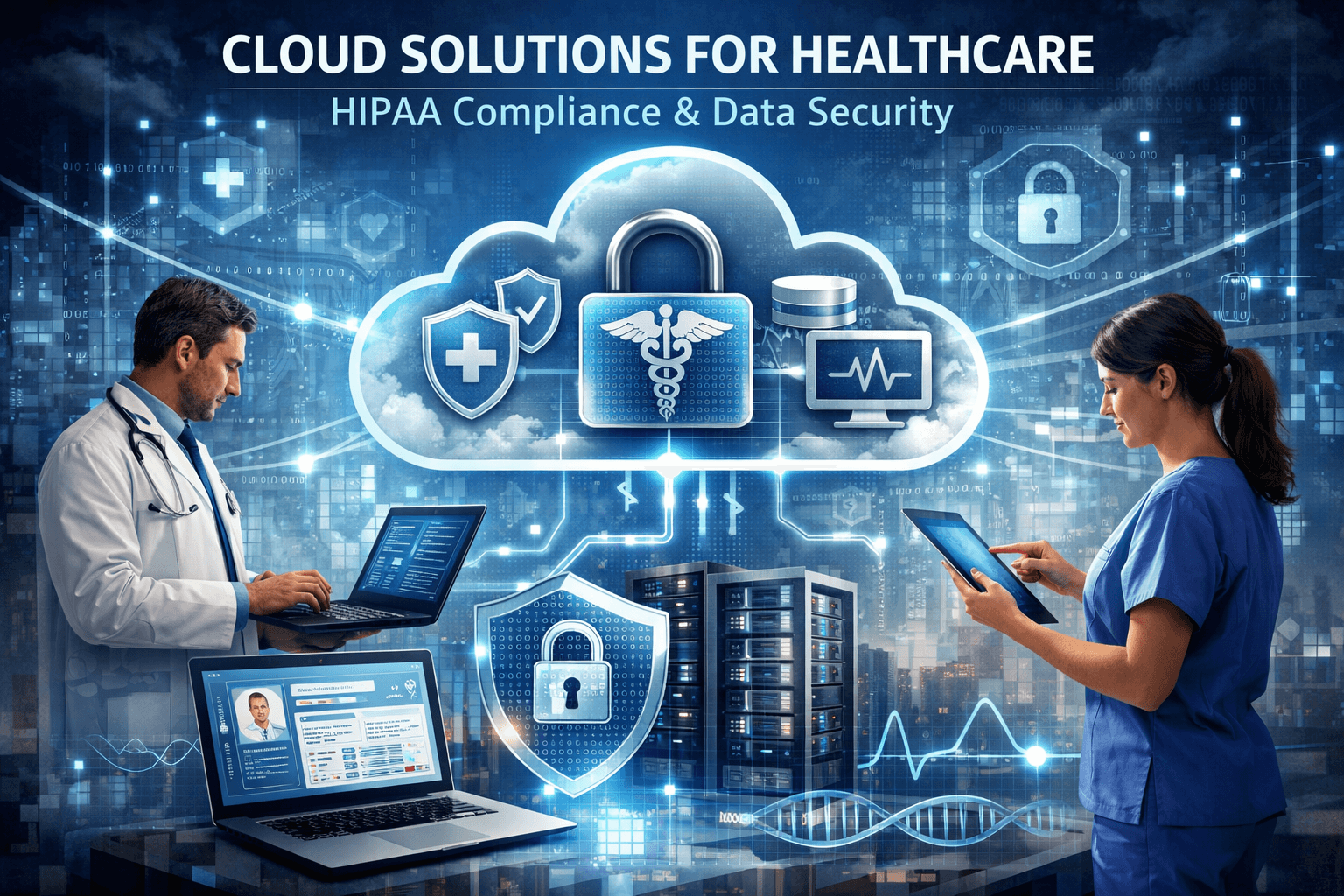
"Discover how healthcare organizations can leverage cloud computing while maintaining HIPAA compliance. Learn about essential security measures, compliance frameworks, and best practices for protecting patient data in the cloud."
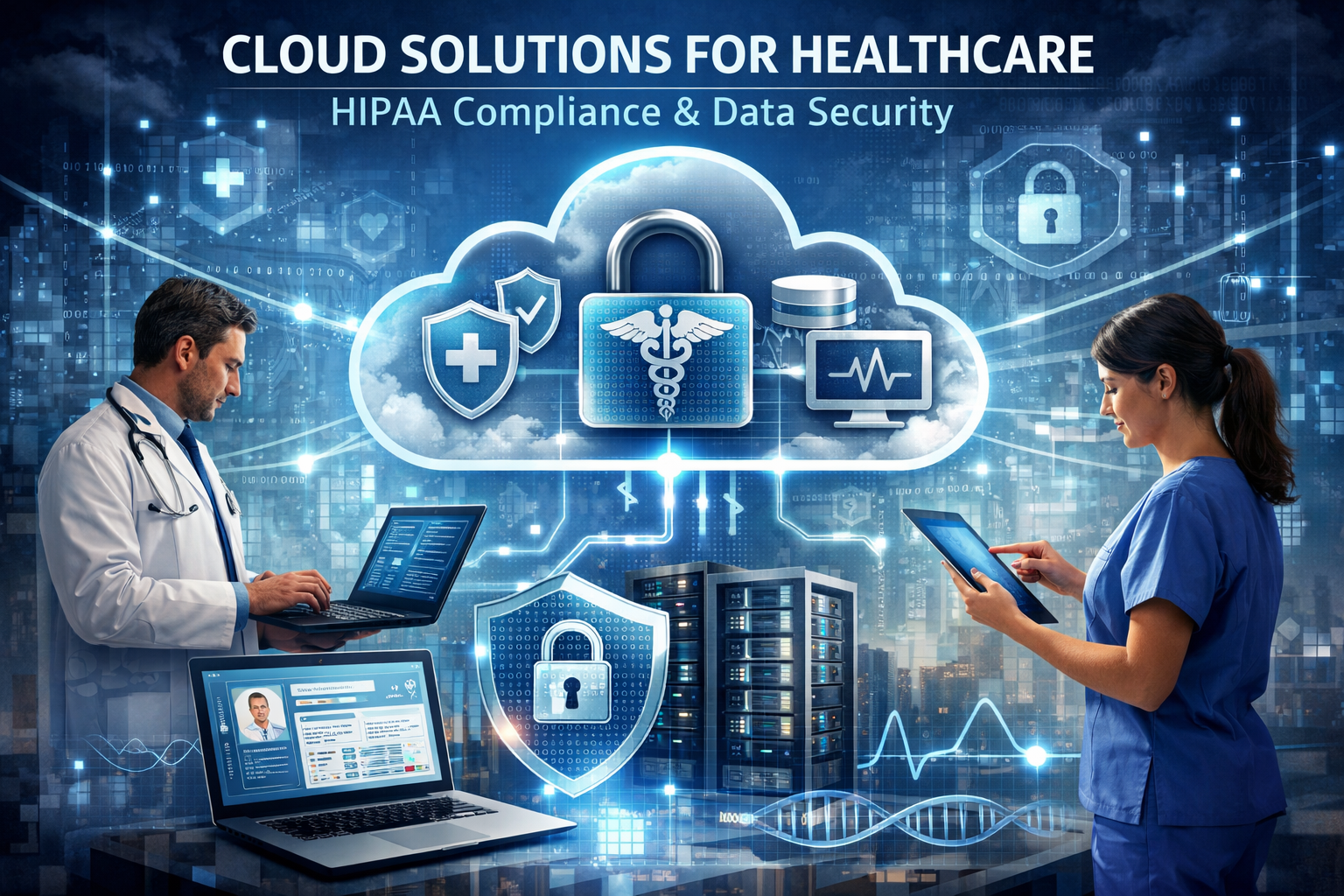
Why Healthcare Organizations Are Moving to the Cloud.
The healthcare industry is undergoing a digital transformation, with cloud computing at its core. However, this shift comes with unique challenges—particularly around patient data privacy and regulatory compliance. For healthcare organizations considering cloud adoption, understanding HIPAA requirements and implementing robust security measures isn't optional; it's essential.
Healthcare providers are increasingly turning to cloud solutions to address growing demands for scalability, cost efficiency, and improved patient care. Cloud infrastructure offers numerous advantages including reduced IT overhead, enhanced collaboration capabilities, and the ability to quickly deploy new applications and services.
Modern healthcare relies on massive amounts of data—from electronic health records (EHR) to medical imaging and real-time patient monitoring. Traditional on-premises infrastructure often struggles to keep pace with these demands. Cloud platforms provide the computational power and storage capacity needed to handle big data analytics, artificial intelligence applications, and telemedicine platforms that are becoming standard in modern healthcare delivery.
Understanding HIPAA Requirements for Cloud Computing
The Health Insurance Portability and Accountability Act (HIPAA) sets strict standards for protecting sensitive patient health information. When healthcare organizations move to the cloud, they must ensure their cloud service providers (CSPs) meet these requirements.
Key HIPAA Components Affecting Cloud Deployments:
HIPAA's Privacy Rule governs how protected health information (PHI) can be used and disclosed. In cloud environments, this means implementing strict access controls and ensuring that data sharing mechanisms comply with minimum necessary standards.
The Security Rule requires administrative, physical, and technical safeguards to protect electronic PHI (ePHI). Cloud implementations must address encryption requirements, access management, audit controls, and disaster recovery capabilities.
The Breach Notification Rule mandates that any unauthorized access to PHI must be reported. Cloud-based systems need comprehensive logging and monitoring to detect and report potential breaches promptly.
Business Associate Agreements (BAA): Your Legal Foundation
One of the most critical aspects of HIPAA-compliant cloud adoption is establishing a Business Associate Agreement with your cloud service provider. Not all cloud providers offer BAAs, and working with a provider that does is non-negotiable for healthcare organizations.
A proper BAA should clearly define how the CSP will handle PHI, their security obligations, breach notification procedures, and provisions for auditing and compliance verification. Major cloud providers like AWS, Microsoft Azure, and Google Cloud offer HIPAA-compliant services with BAAs, but organizations must still configure and use these services correctly.
Essential Security Measures for Healthcare Cloud Environments
Encryption at Every Layer
Data encryption is fundamental to HIPAA compliance. Healthcare organizations must implement encryption for data at rest and data in transit. This means encrypting databases, file storage, backups, and all network communications. Modern cloud platforms offer built-in encryption services, but proper key management is crucial. Organizations should maintain control over encryption keys whenever possible, using solutions like AWS Key Management Service, Azure Key Vault, or Google Cloud KMS.
Identity and Access Management (IAM)
Controlling who can access PHI is critical. Implement the principle of least privilege, ensuring users only have access to the data and systems necessary for their roles. Multi-factor authentication (MFA) should be mandatory for all users accessing cloud resources containing PHI. Role-based access control (RBAC) helps manage permissions at scale, while privileged access management (PAM) solutions provide additional security for administrative accounts.
Network Security and Segmentation
Cloud networks must be properly segmented to isolate PHI from other systems. Virtual private clouds (VPCs), security groups, and network access control lists help create secure network boundaries. Implement web application firewalls (WAF) to protect patient portals and healthcare applications from common attacks. Use virtual private networks (VPN) or dedicated connections for secure access to cloud resources.
Comprehensive Audit Logging and Monitoring
HIPAA requires detailed audit trails of all access to PHI. Cloud platforms offer extensive logging capabilities through services like AWS CloudTrail, Azure Monitor, and Google Cloud Logging. However, simply enabling logs isn't enough—organizations need security information and event management (SIEM) systems to analyze logs, detect anomalies, and alert on potential security incidents in real-time.
Disaster Recovery and Business Continuity
Healthcare organizations cannot afford downtime. Cloud platforms offer robust disaster recovery capabilities, but these must be properly configured and regularly tested. Implement automated backup solutions with appropriate retention periods as required by HIPAA. Design multi-region architectures for critical systems to ensure availability even during regional outages. Regularly test disaster recovery procedures to ensure recovery time objectives (RTO) and recovery point objectives (RPO) meet healthcare operational requirements.
Choosing the Right Cloud Deployment Model
Healthcare organizations have several cloud deployment options, each with different compliance implications:
Public Cloud: Services like AWS, Azure, and Google Cloud offer HIPAA-eligible services. While cost-effective and scalable, they require careful configuration and ongoing compliance management.
Private Cloud: Dedicated infrastructure offers maximum control but at higher costs. This option suits organizations with highly sensitive data or specific regulatory requirements beyond HIPAA.
Hybrid Cloud: Combining on-premises infrastructure with public cloud services allows organizations to maintain sensitive systems locally while leveraging cloud benefits for other workloads. This approach requires careful attention to data flow and security at integration points.
Compliance Frameworks and Certifications
Beyond HIPAA, healthcare organizations should consider additional compliance frameworks. The HITRUST CSF (Common Security Framework) provides a comprehensive, certifiable framework specifically designed for healthcare. SOC 2 Type II audits verify that cloud providers maintain appropriate security controls. ISO 27001 certification demonstrates commitment to information security management best practices.
When evaluating cloud providers, verify their compliance certifications and review their attestation reports. However, remember that provider compliance doesn't automatically make your implementation compliant—shared responsibility models mean you're accountable for properly configuring and using cloud services.
Common Pitfalls to Avoid
Many healthcare organizations stumble during cloud adoption. Misconfigured storage buckets have led to numerous data breaches. Always verify that cloud storage is not publicly accessible and implement automated compliance checking tools.
Insufficient employee training remains a significant vulnerability. Regular security awareness training ensures staff understand their role in protecting PHI and using cloud systems securely.
Neglecting mobile device security can create gaps in your security posture. With healthcare professionals increasingly using mobile devices, implement mobile device management (MDM) solutions and ensure mobile applications handling PHI meet security requirements.
Failing to maintain an accurate inventory of where PHI resides in the cloud makes compliance verification impossible. Implement data discovery and classification tools to maintain visibility across your cloud environment.
Best Practices for HIPAA-Compliant Cloud Migration
Start with a comprehensive risk assessment to identify potential security gaps and compliance requirements. Develop a detailed migration plan that prioritizes security at every stage. Begin with non-critical workloads to gain experience before migrating systems containing PHI.
Implement infrastructure as code (IaC) to ensure consistent, compliant configurations across your cloud environment. Tools like Terraform, AWS CloudFormation, or Azure Resource Manager help maintain security standards and enable quick replication of compliant architectures.
Conduct regular security assessments and penetration testing to identify vulnerabilities before they can be exploited. Engage third-party auditors to verify HIPAA compliance and identify areas for improvement.
The Future of Healthcare in the Cloud
Cloud adoption in healthcare will continue accelerating, driven by emerging technologies. Artificial intelligence and machine learning applications promise to revolutionize diagnosis and treatment, but require the computational power and data storage that cloud platforms provide.
Interoperability initiatives like FHIR (Fast Healthcare Interoperability Resources) benefit from cloud-based data exchange platforms, enabling better care coordination across healthcare providers.
Telemedicine and remote patient monitoring, accelerated by recent global health challenges, rely heavily on cloud infrastructure to deliver care beyond traditional healthcare settings.
Conclusion
Moving healthcare systems to the cloud offers tremendous benefits, but success requires unwavering commitment to HIPAA compliance and data security. By understanding regulatory requirements, implementing comprehensive security measures, choosing the right cloud partners, and maintaining ongoing vigilance, healthcare organizations can confidently leverage cloud computing while protecting patient privacy.
The journey to HIPAA-compliant cloud adoption may seem daunting, but with proper planning, the right expertise, and commitment to security best practices, healthcare organizations can achieve both innovation and compliance. As cloud technologies continue to evolve, partnering with experienced cloud consultants who understand healthcare's unique requirements can make the difference between a successful transformation and a costly compliance failure.
Ready to migrate your healthcare systems to the cloud while maintaining HIPAA compliance? Contact our cloud consulting experts today for a compliant cloud strategy tailored to your organization's needs.