Explore our complete collection of technical deep-dives, case studies, and industry insights.
Articles Published
Success Stories
System Uptime
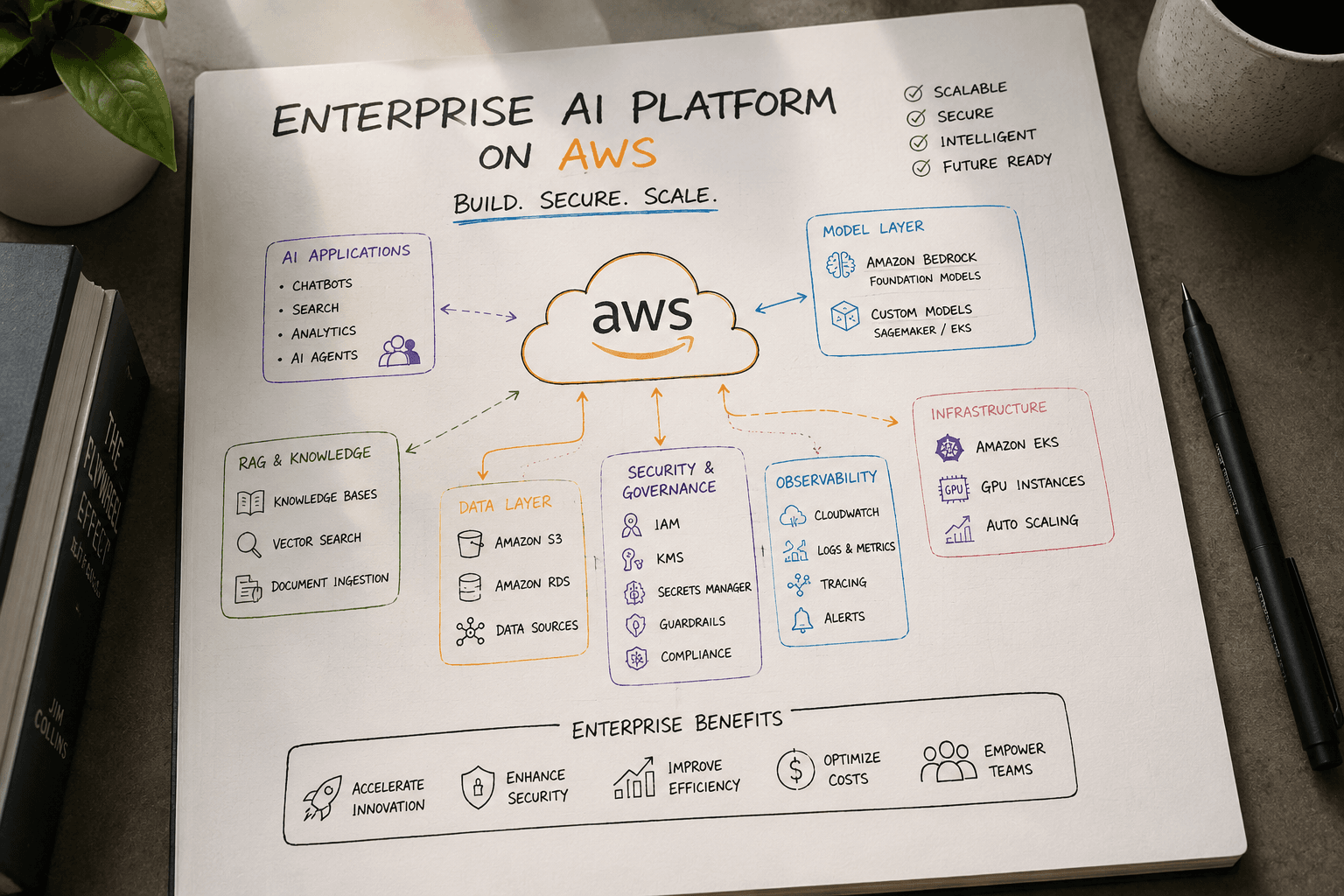
Learn how to build an enterprise AI platform on AWS using Amazon Bedrock, Amazon EKS, RAG, secure networking, IAM, model infrastructure, observability, governance, and cost optimization. Discover how to design a scalable AI platform for production workloads.
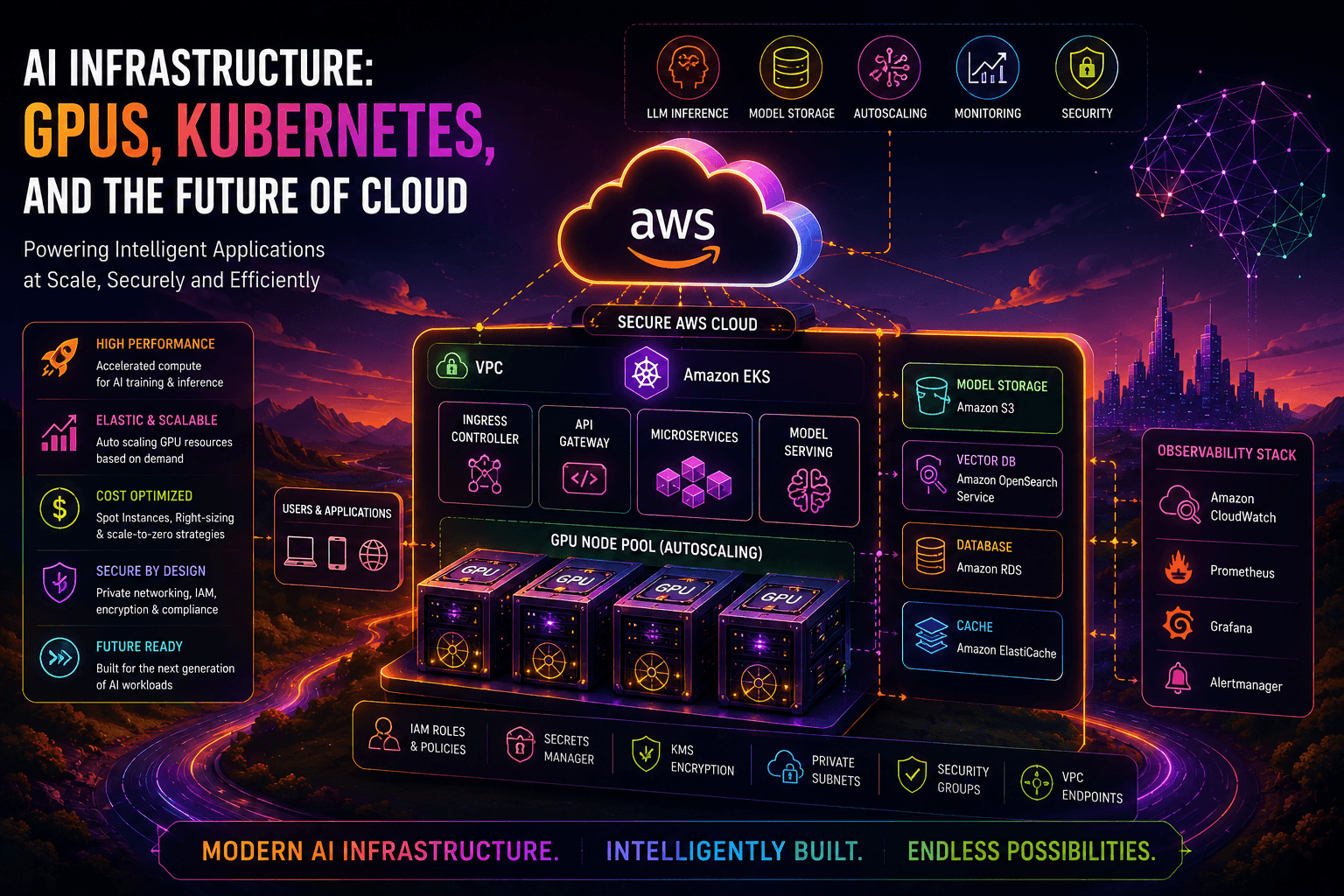
Explore how modern AI infrastructure uses GPUs, Kubernetes, cloud platforms, and intelligent autoscaling to run AI and LLM workloads at scale. Learn about GPU selection, Amazon EKS, model serving, monitoring, security, cost optimization, and the future of cloud AI infrastructure.
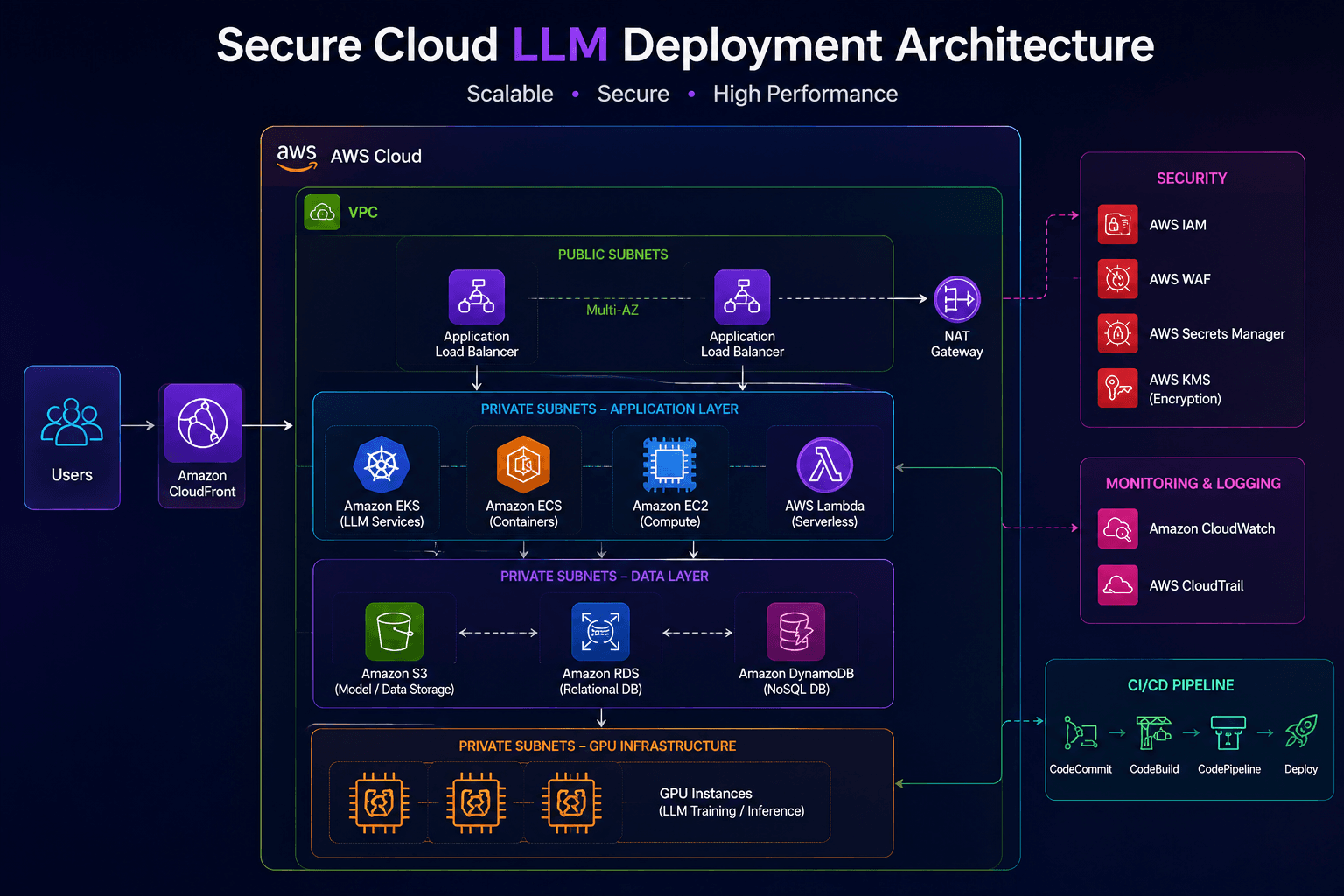
Learn how to securely deploy Large Language Models (LLMs) in the cloud using AWS. Explore GPU infrastructure, private networking, IAM, encryption, secrets management, container security, monitoring, and production security best practices.
Acelot Innovation Private Limited needed a secure and scalable platform for conducting online examinations with real-time remote proctoring. The platform needed to provide students with a smooth examination experience while enabling administrators and proctors to monitor examination sessions and review potential proctoring events. The solution needed to bring together several different workloads, including secure user authentication, examination management APIs, live video streaming, AI-powered video analysis, proctoring event generation, recorded examination videos, and application data management. A major architectural challenge was that these workloads have very different resource requirements. Conventional API requests are relatively lightweight, while live video requires high bandwidth and AI-based video analysis can require significant compute and GPU resources. Therefore, the platform needed an architecture where API, video-streaming, and AI-processing workloads could operate and scale independently, without allowing heavy video or AI workloads to negatively impact the core examination application.
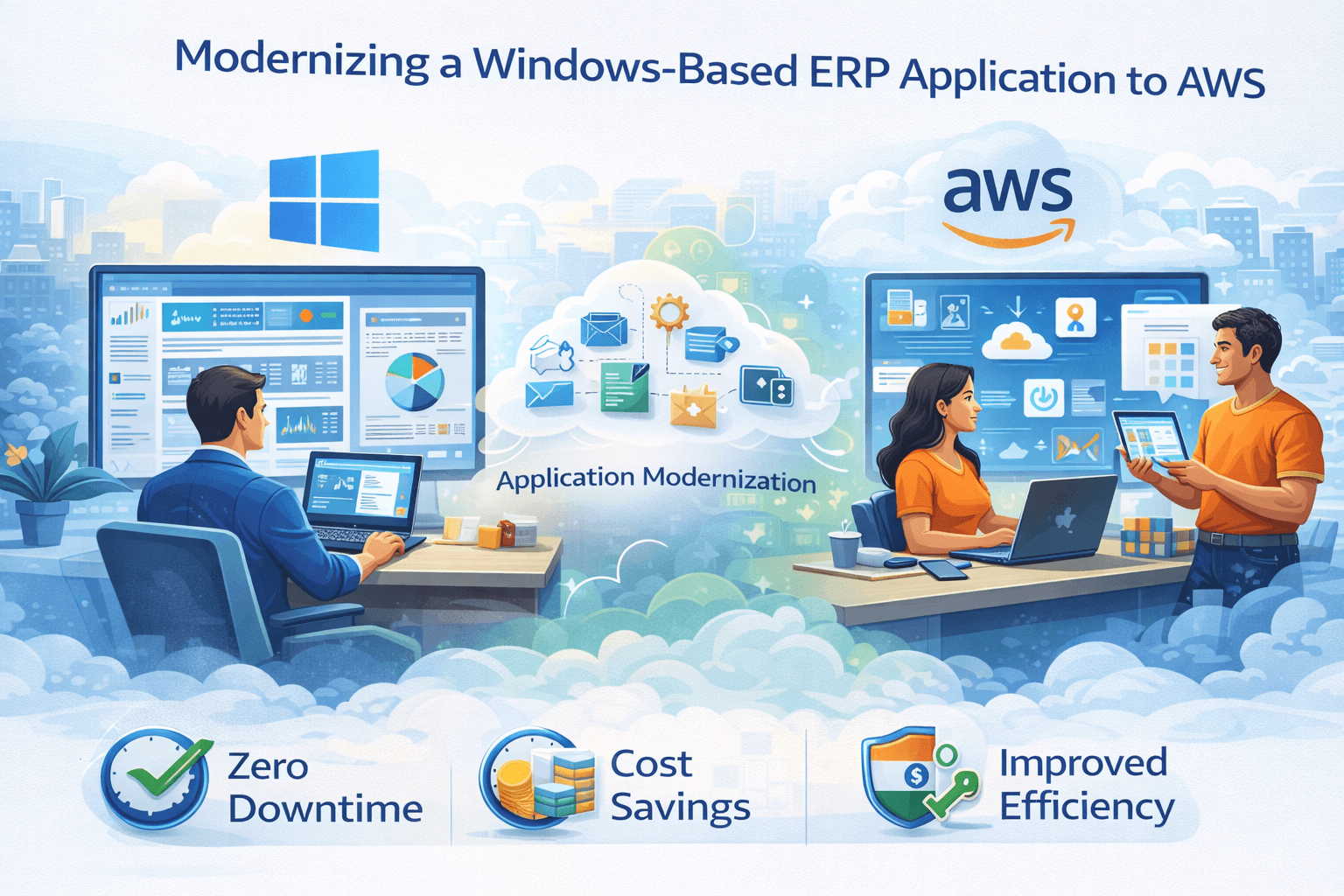
The client operated a mission-critical Windows-based ERP application hosted on Amazon Elastic Beanstalk with Amazon RDS (MS SQL Server) as the backend database. As business usage increased, the platform began experiencing serious scalability, reliability, and performance issues. Key challenges included: Poor scalability during peak business hours Limited control over auto-scaling behavior in Elastic Beanstalk Inefficient load balancing, leading to uneven traffic distribution Application slowdowns directly impacting end customers Frequent performance degradation without clear root cause No deep application-level monitoring or APM visibility Limited observability into infrastructure and application health Operational firefighting impacting business continuity The ERP system was customer-facing and business-critical, so performance issues were directly affecting customer satisfaction and revenue. The client needed a modern, scalable, and observable platform without rewriting the entire ERP application.
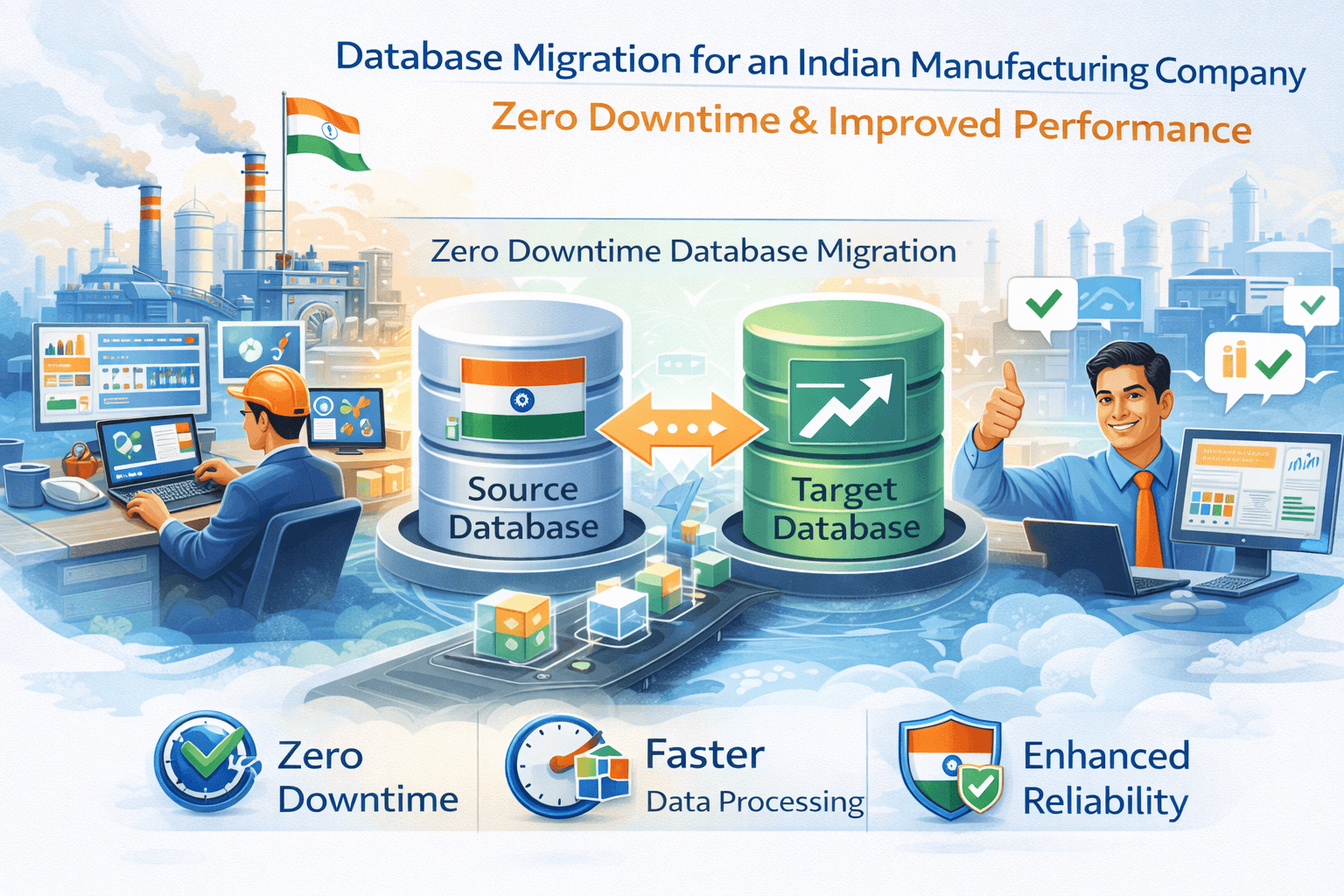
The client operated a mission-critical manufacturing ERP and production management system that relied on a legacy on-premise database. As business operations expanded, the database became a major bottleneck affecting production planning, inventory visibility, and reporting. Key challenges included: Legacy database infrastructure with performance limitations Frequent slow queries impacting production systems High risk of downtime during any database changes Manual backup and disaster recovery processes Limited scalability to support growing manufacturing operations Strict business requirement for zero downtime during migration No tolerance for data loss or transactional inconsistency The organization required a seamless database migration strategy that would modernize performance while keeping manufacturing operations fully operational.