Back to Home

Proven
Success Stories

Explore how we harness cloud-native architecture and elite engineering principles to deliver transformative digital solutions at scale.
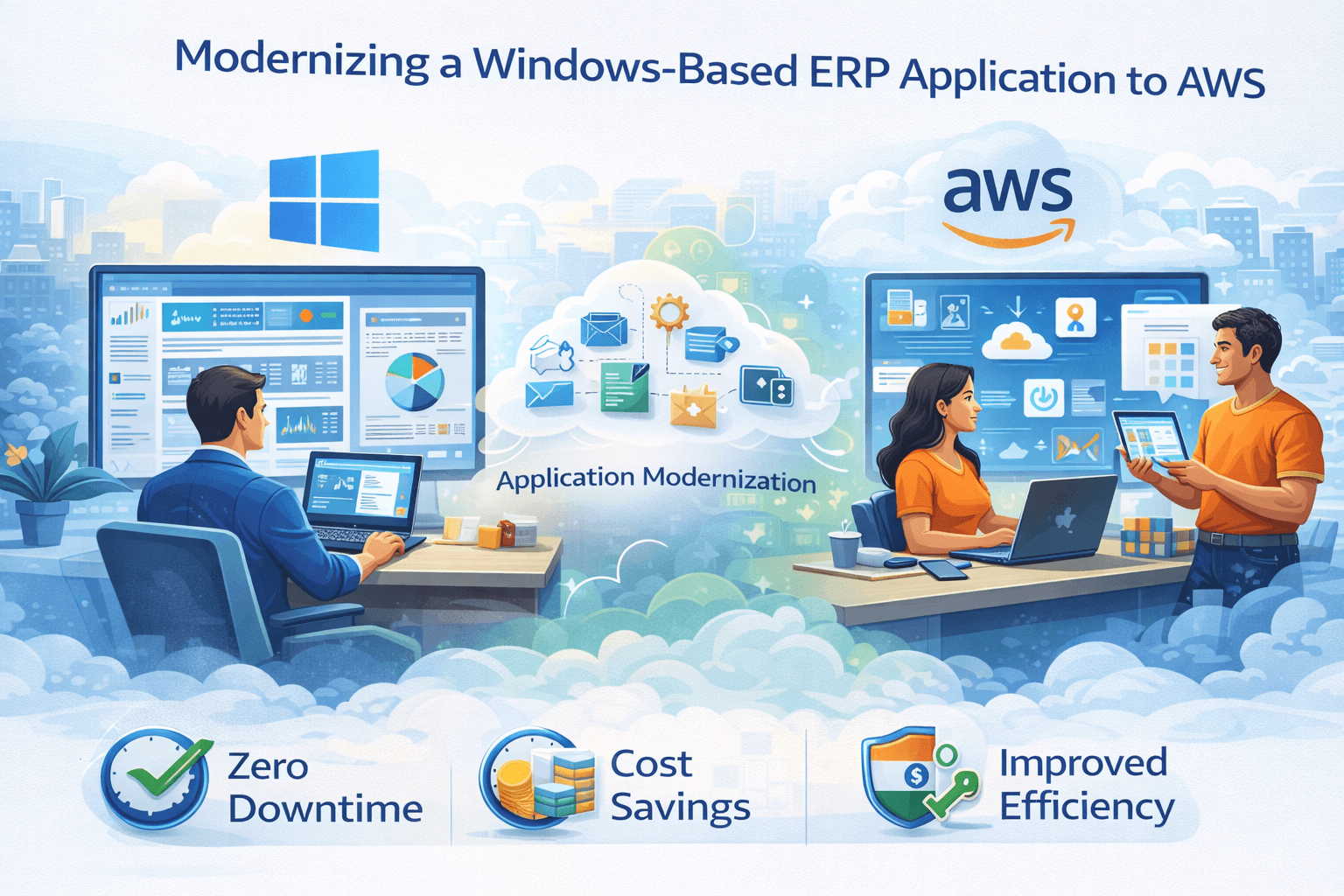
Modernizing a Windows-Based ERP Application: Migrating from Elastic Beanstalk to Amazon EKS for Scalability, Reliability, and Observability
Confidential Enterprise Client (Manufacturing & Distribution ERP)
Windows-Based ERP ApplicationAWS

Modernizing a Windows-Based ERP Application: Migrating from Elastic Beanstalk to Amazon EKS for Scalability, Reliability, and Observability

The client operated a mission-critical Windows-based ERP application hosted on Amazon Elastic Beanstalk with Amazon RDS (MS SQL Server) as the backend database. As business usage increased, the platform began experiencing serious scalability, reliability, and performance issues. Key challenges included: Poor scalability during peak business hours Limited control over auto-scaling behavior in Elastic Beanstalk Inefficient load balancing, leading to uneven traffic distribution Application slowdowns directly impacting end customers Frequent performance degradation without clear root cause No deep application-level monitoring or APM visibility Limited observability into infrastructure and application health Operational firefighting impacting business continuity The ERP system was customer-facing and business-critical, so performance issues were directly affecting customer satisfaction and revenue. The client needed a modern, scalable, and observable platform without rewriting the entire ERP application.

View Case Study
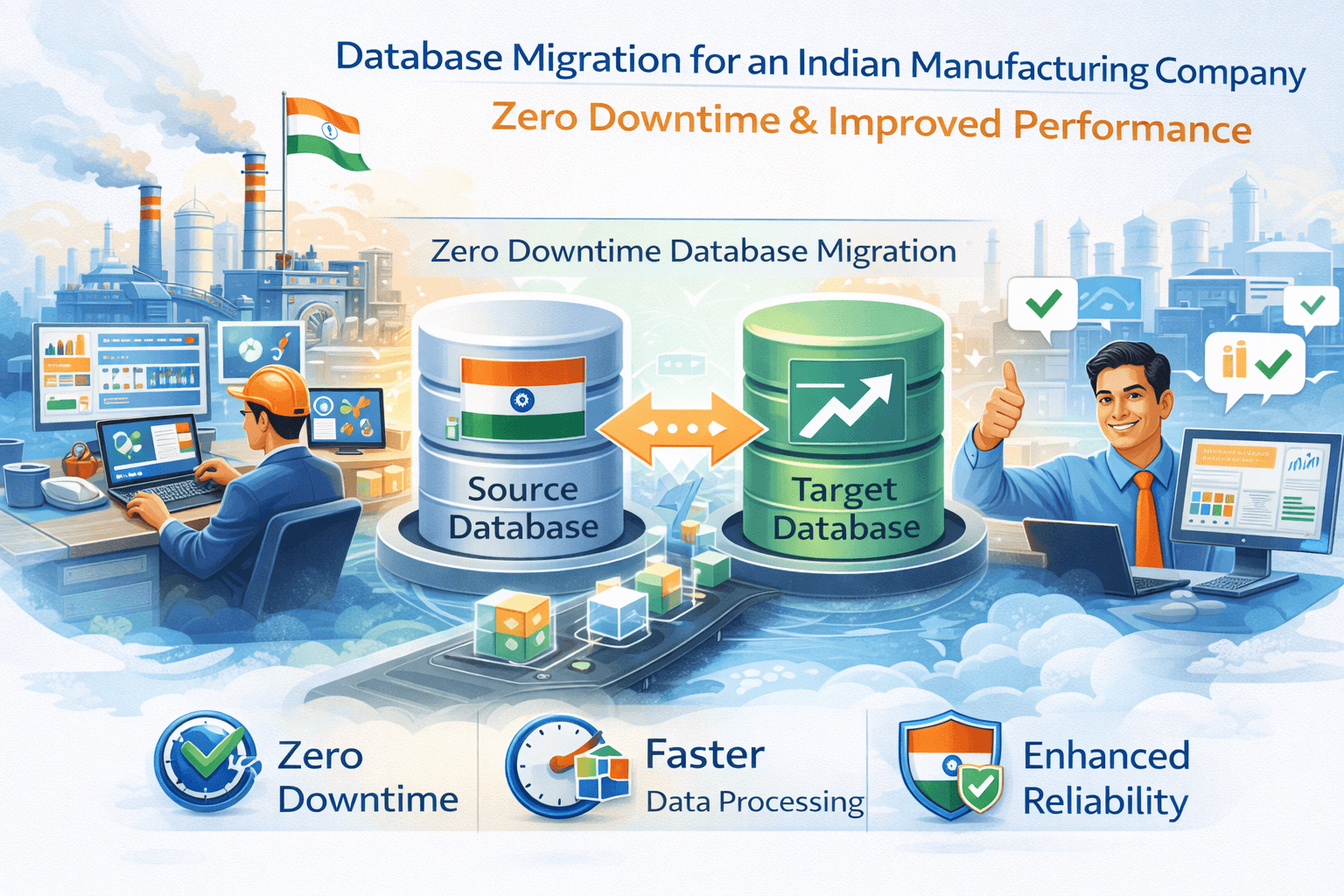
Database Migration for an Indian Manufacturing Company – Zero Downtime & Improved Performance
Confidential Indian Manufacturing Company (Automotive & Industrial Components)
Database MigrationAWS

Database Migration for an Indian Manufacturing Company – Zero Downtime & Improved Performance

The client operated a mission-critical manufacturing ERP and production management system that relied on a legacy on-premise database. As business operations expanded, the database became a major bottleneck affecting production planning, inventory visibility, and reporting. Key challenges included: Legacy database infrastructure with performance limitations Frequent slow queries impacting production systems High risk of downtime during any database changes Manual backup and disaster recovery processes Limited scalability to support growing manufacturing operations Strict business requirement for zero downtime during migration No tolerance for data loss or transactional inconsistency The organization required a seamless database migration strategy that would modernize performance while keeping manufacturing operations fully operational.

View Case Study
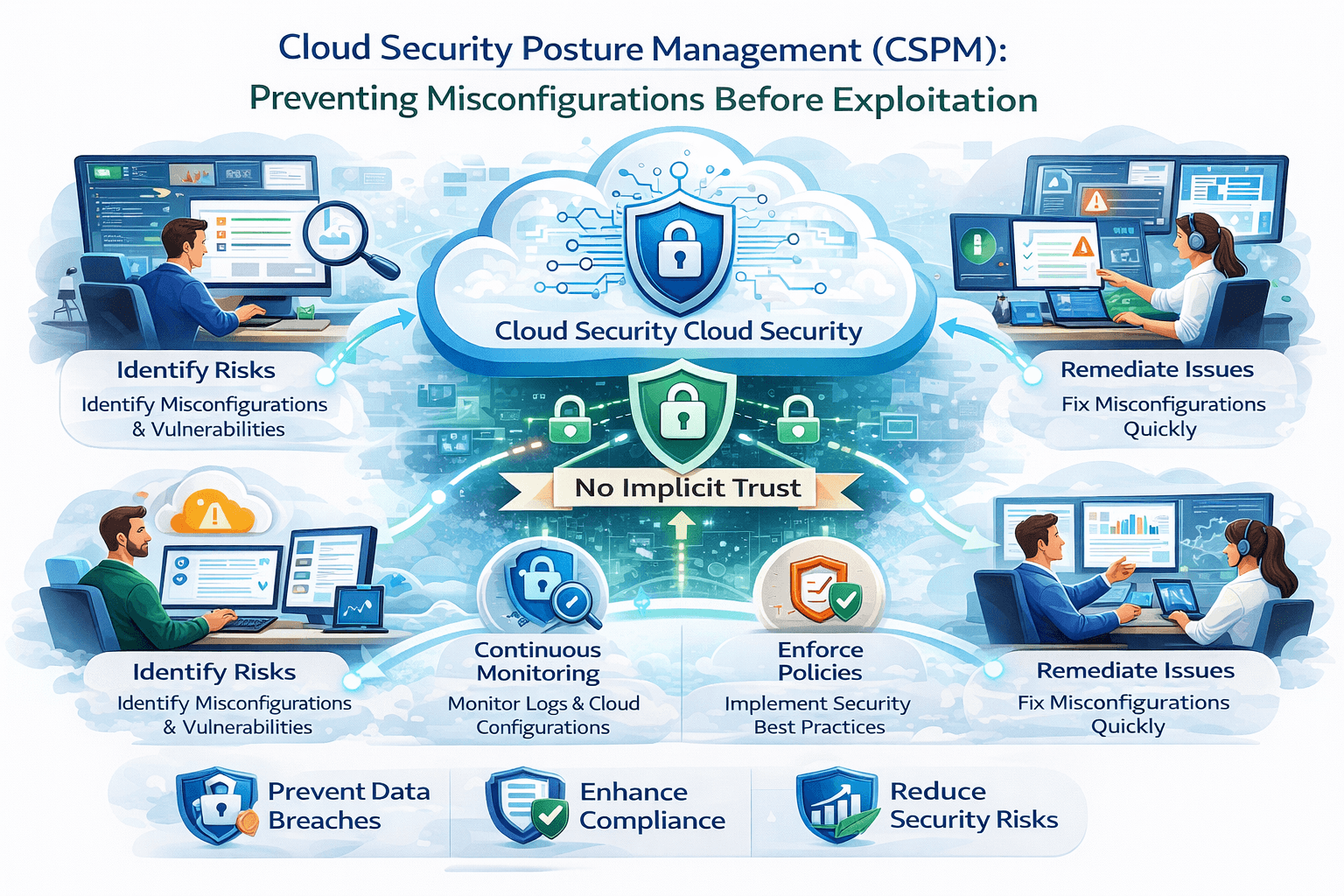
Cloud Security Posture Management (CSPM): Preventing Misconfigurations Before Exploitation
Confidential Enterprise Client (Multi-Cloud & Regulated Industry)
Cloud Security Posture Management (CSPM)Cloud Security

Cloud Security Posture Management (CSPM): Preventing Misconfigurations Before Exploitation

The client operated a large-scale multi-cloud environment supporting mission-critical workloads. Rapid cloud adoption and frequent infrastructure changes led to configuration drift, security gaps, and compliance risks—many of which could be exploited before detection. Key challenges included: Misconfigured cloud resources exposing sensitive data Lack of continuous visibility into cloud security posture Manual security reviews unable to keep pace with changes Inconsistent security controls across AWS, Azure, and GCP Difficulty meeting regulatory and audit requirements Increased risk of breaches caused by human error The organization needed a proactive, automated security approach to identify and remediate misconfigurations before attackers could exploit them.

View Case Study
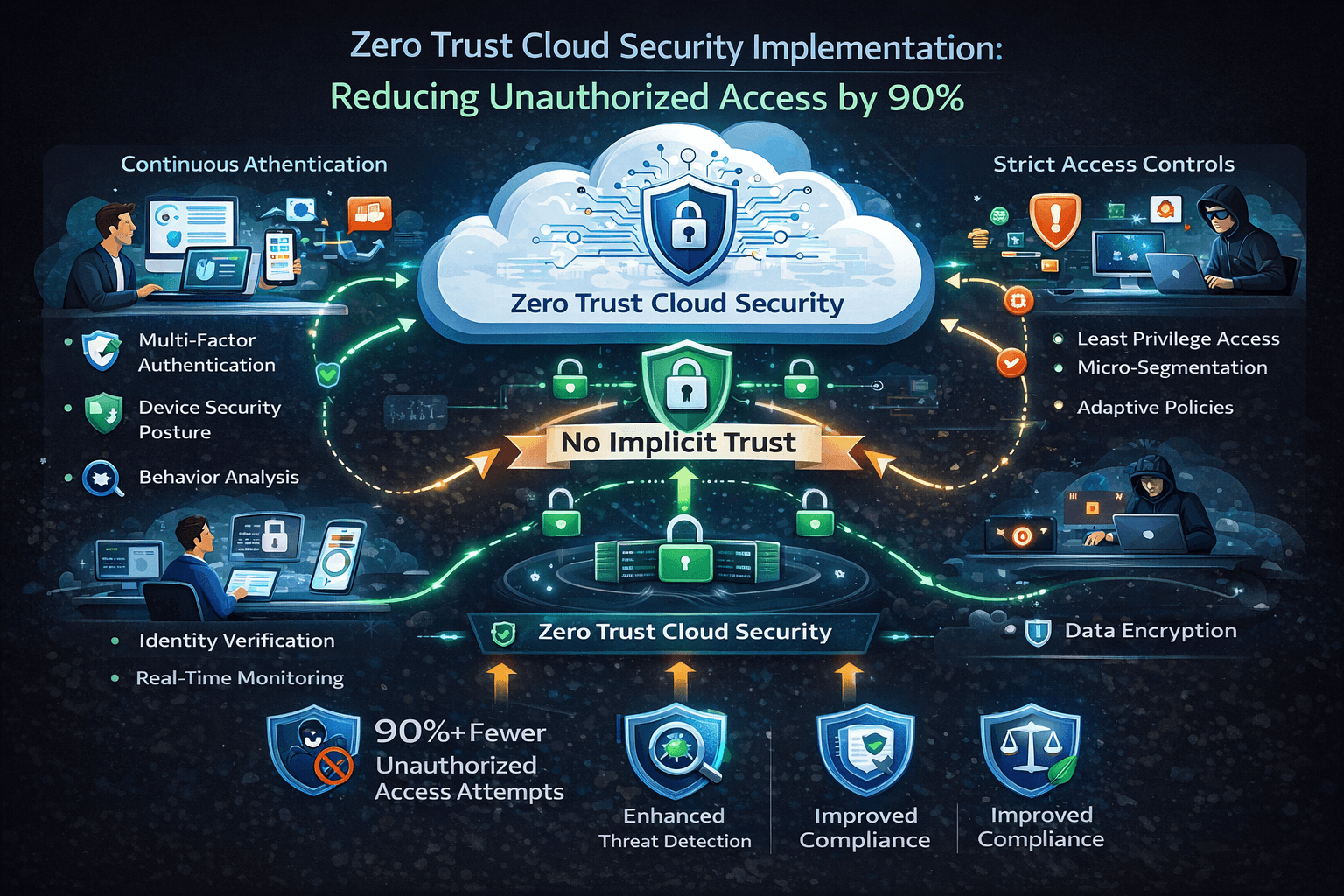
Zero Trust Cloud Security Implementation: Reducing Unauthorized Access by 90%
Confidential Enterprise Client (Multi-Cloud & Hybrid Environment)
Zero Trust Security ArchitectureCloud Security

Zero Trust Cloud Security Implementation: Reducing Unauthorized Access by 90%

The client operated a large-scale cloud environment supporting multiple business-critical applications across different teams and environments. The traditional perimeter-based security model could no longer protect the organization from credential theft, lateral movement, and insider threats. Key challenges included: Excessive permissions and lack of least-privilege access Weak identity controls across users, workloads, and APIs Limited visibility into access patterns and anomalous behavior Inconsistent security policies across cloud environments High number of unauthorized access attempts Growing regulatory and audit pressure The organization needed a modern, identity-centric security model that could continuously verify access and minimize attack surfaces.

View Case Study
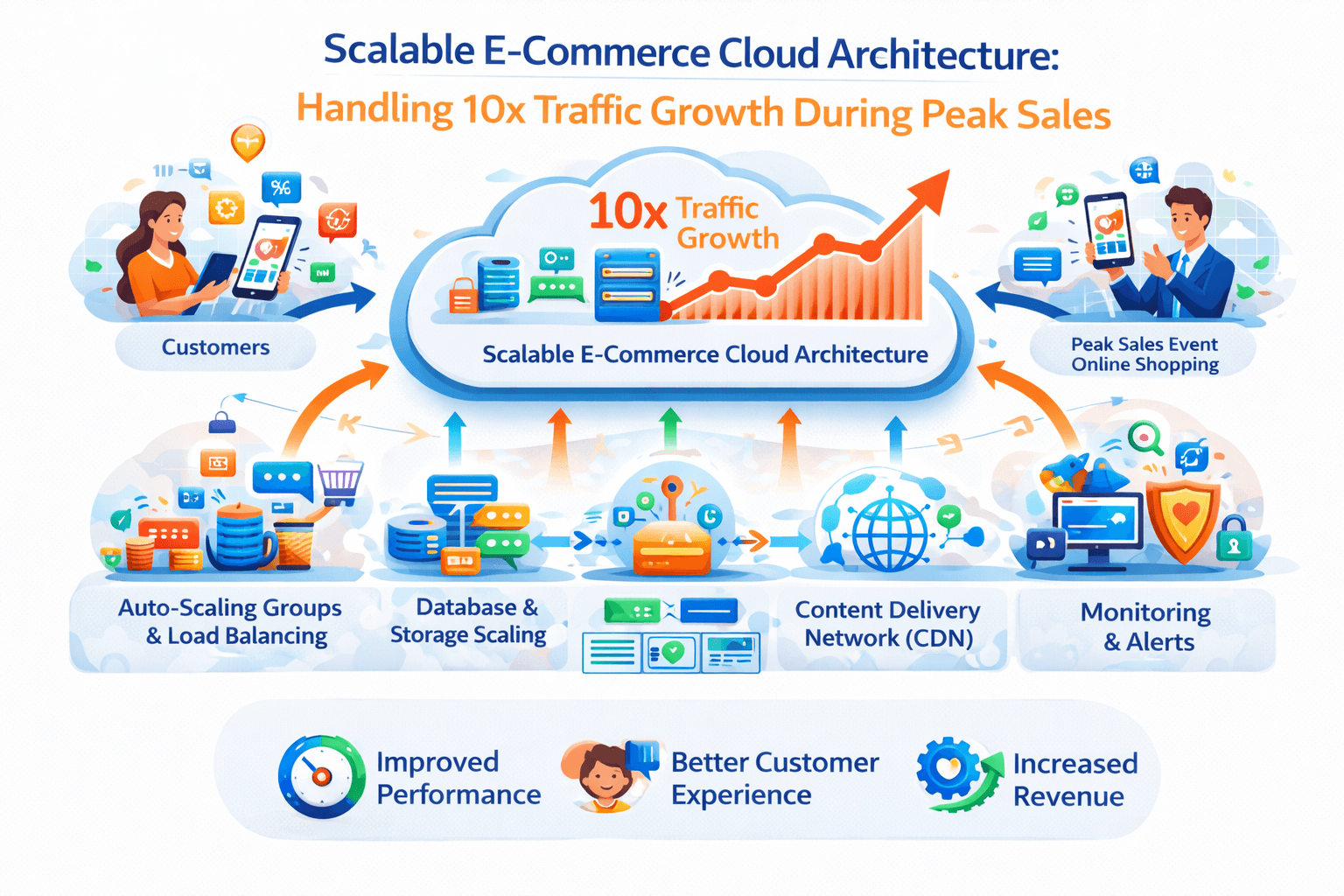
Scalable E-Commerce Cloud Architecture: Handling 10× Traffic Growth During Peak Sales
Confidential E-Commerce Company (Retail & Online Marketplace)
AWSCloud-Native Architecture

Scalable E-Commerce Cloud Architecture: Handling 10× Traffic Growth During Peak Sales

The client operated a rapidly growing e-commerce platform with frequent seasonal sales, flash deals, and promotional campaigns. During peak sales events, traffic spiked up to 10× normal load, causing performance degradation and operational risk. Key challenges included: Website slowdowns and timeouts during peak traffic Inability to scale infrastructure fast enough during flash sales Cart abandonment due to poor performance Manual infrastructure scaling and reactive firefighting Risk of downtime impacting revenue and brand trust Limited observability into application and infrastructure performance The business required a highly scalable, resilient, and cost-efficient cloud architecture capable of handling massive traffic surges without impacting customer experience.

View Case Study
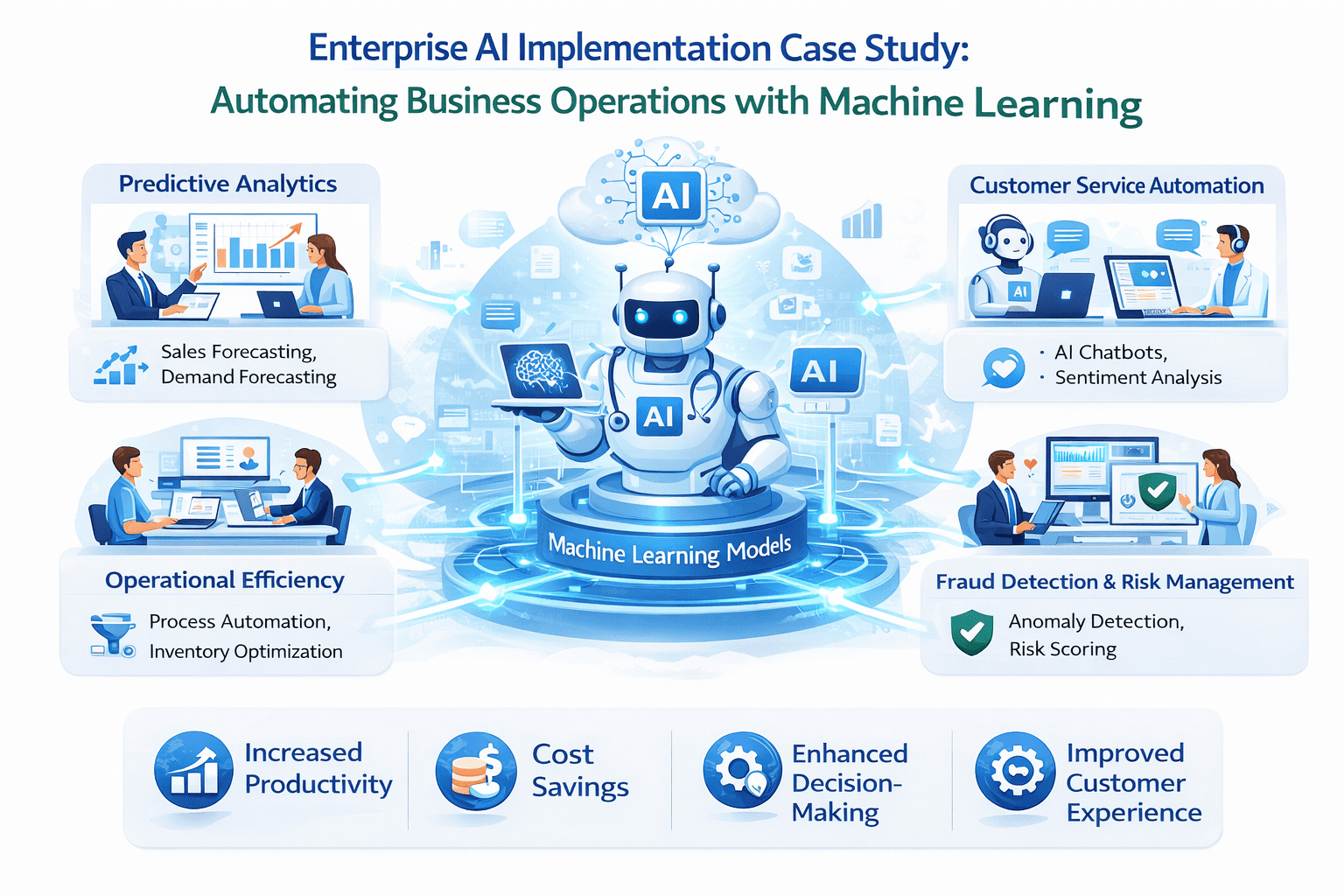
Enterprise AI Implementation Case Study: Automating Business Operations with Machine Learning
Confidential Enterprise Client (Multi-Industry Organization)
AWS BedRockArtificial Intelligence

Enterprise AI Implementation Case Study: Automating Business Operations with Machine Learning

The client was a large enterprise managing complex, multi-department business operations across finance, operations, customer support, and supply chain. Many critical processes relied on manual workflows, static rule-based systems, and disconnected tools, resulting in inefficiencies and delayed decision-making. Key challenges included: High dependency on manual data processing and approvals Slow turnaround times for operational and business decisions Limited visibility into real-time business performance Inconsistent data quality across departments Difficulty scaling operations without increasing headcount Growing pressure to modernize operations using AI The enterprise needed a scalable, intelligent automation platform that could optimize operations while integrating seamlessly with existing systems.

View Case Study
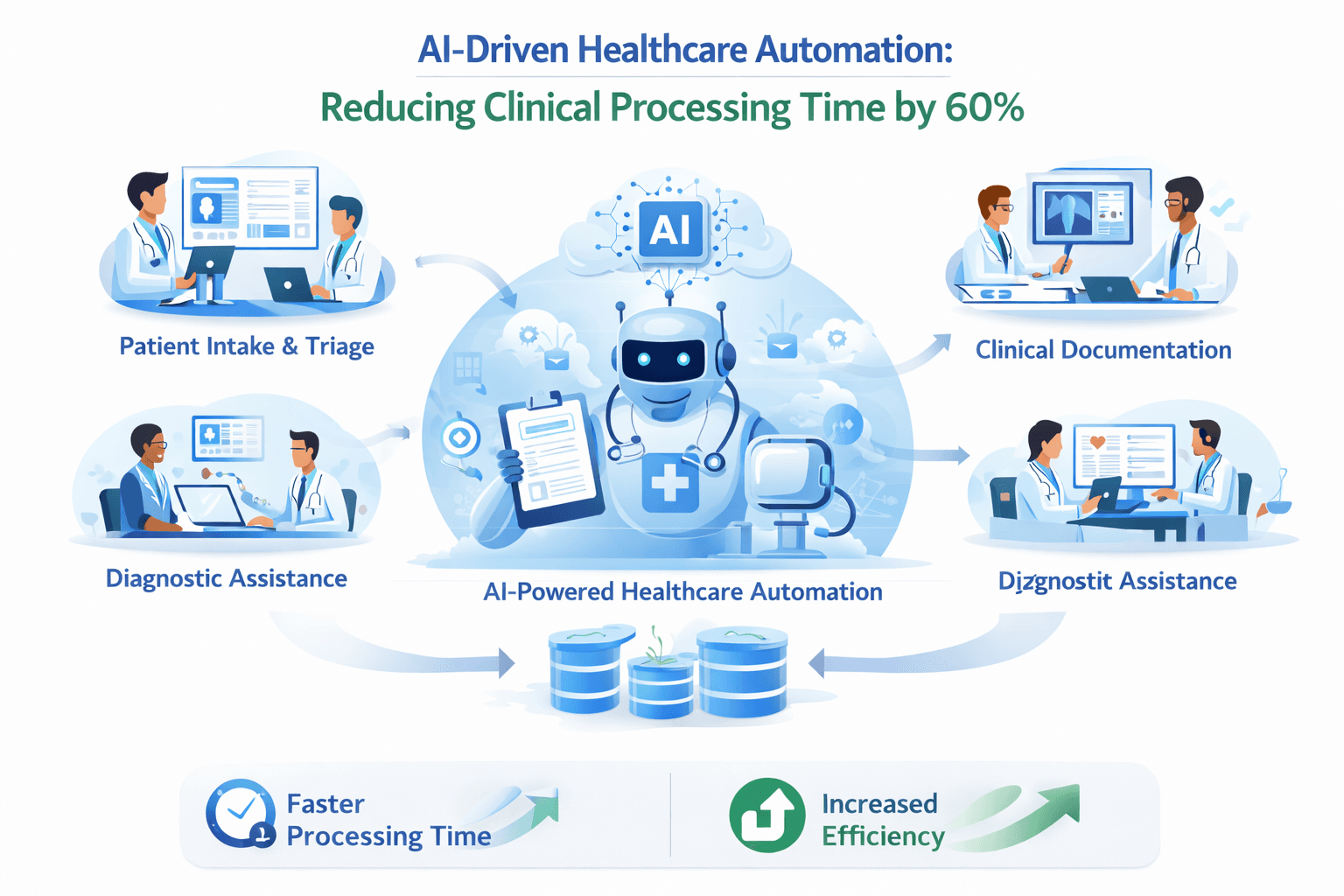
AI-Driven Healthcare Automation: Reducing Clinical Processing Time by 60%
Confidential Healthcare Provider (Hospital & Diagnostic Network)
Artificial IntelligenceMachine Learning

AI-Driven Healthcare Automation: Reducing Clinical Processing Time by 60%

The client was a large healthcare provider managing high volumes of clinical data, including patient records, diagnostic reports, medical imaging, and insurance documentation. Most operational workflows were manual, time-consuming, and error-prone, leading to delayed care and operational inefficiencies. Key challenges included: Manual clinical data processing consuming significant staff time Delays in patient onboarding, diagnostics, and reporting High administrative workload for clinicians and support staff Inconsistent data quality and documentation errors Limited real-time insights into clinical operations Strict regulatory and patient data privacy requirements The organization needed a secure, intelligent, and automated healthcare platform that could streamline workflows without compromising patient safety or compliance

View Case Study
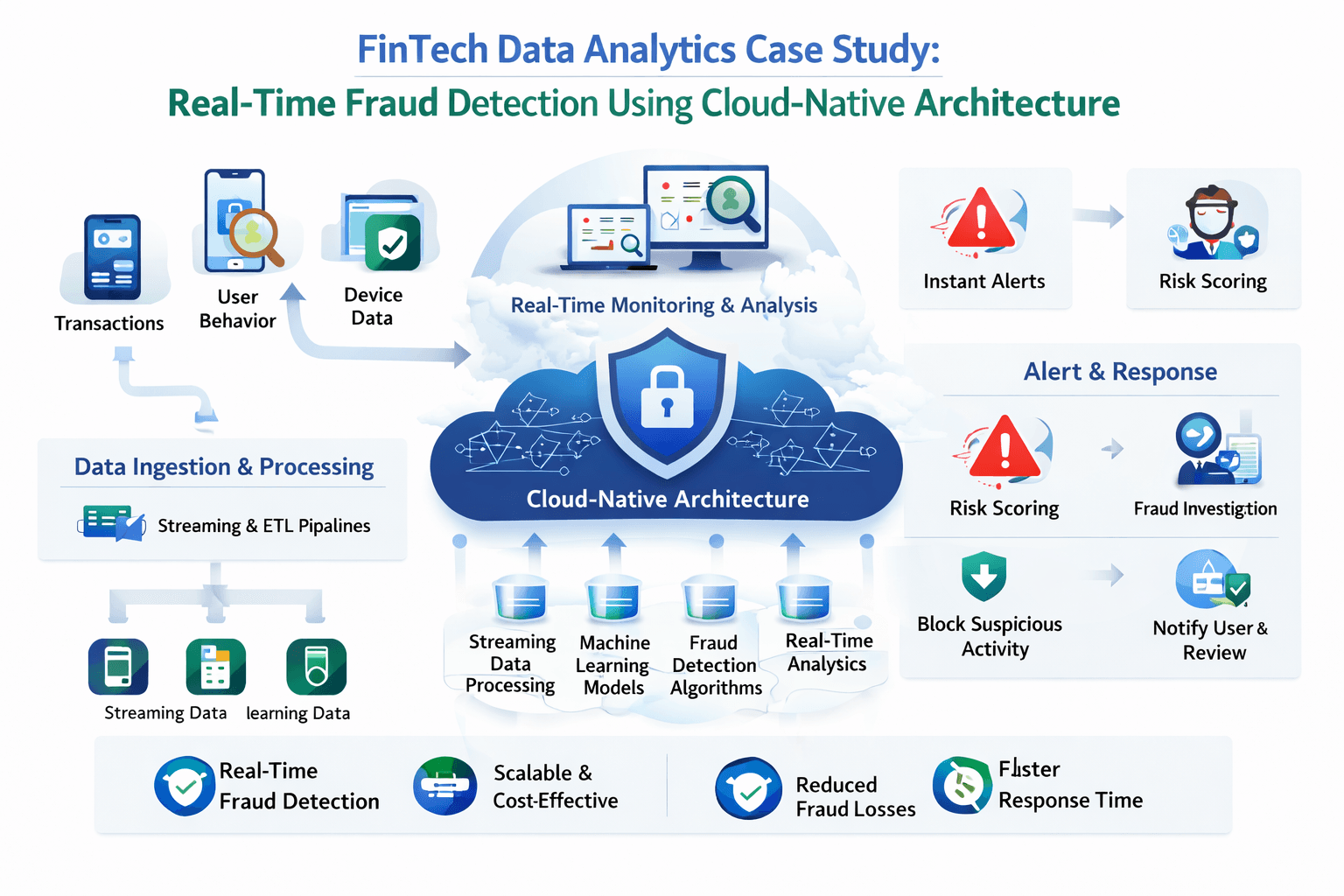
FinTech Data Analytics Case Study: Real-Time Fraud Detection Using Cloud-Native Architecture
Confidential FinTech Company (Payments & Digital Banking)
AWSCloud-Native Architecture

FinTech Data Analytics Case Study: Real-Time Fraud Detection Using Cloud-Native Architecture

The client operated a high-volume FinTech platform processing millions of transactions per day across multiple payment channels. Traditional rule-based fraud detection systems were slow, reactive, and ineffective against evolving fraud patterns. Key challenges included: Inability to detect fraud in real time High false-positive rates impacting genuine customers Legacy batch-based analytics pipelines with delayed insights Scalability issues during peak transaction spikes Lack of centralized analytics and observability Security and compliance risks related to sensitive financial data The client needed a real-time, scalable, and intelligent fraud detection platform capable of identifying suspicious transactions within milliseconds

View Case Study
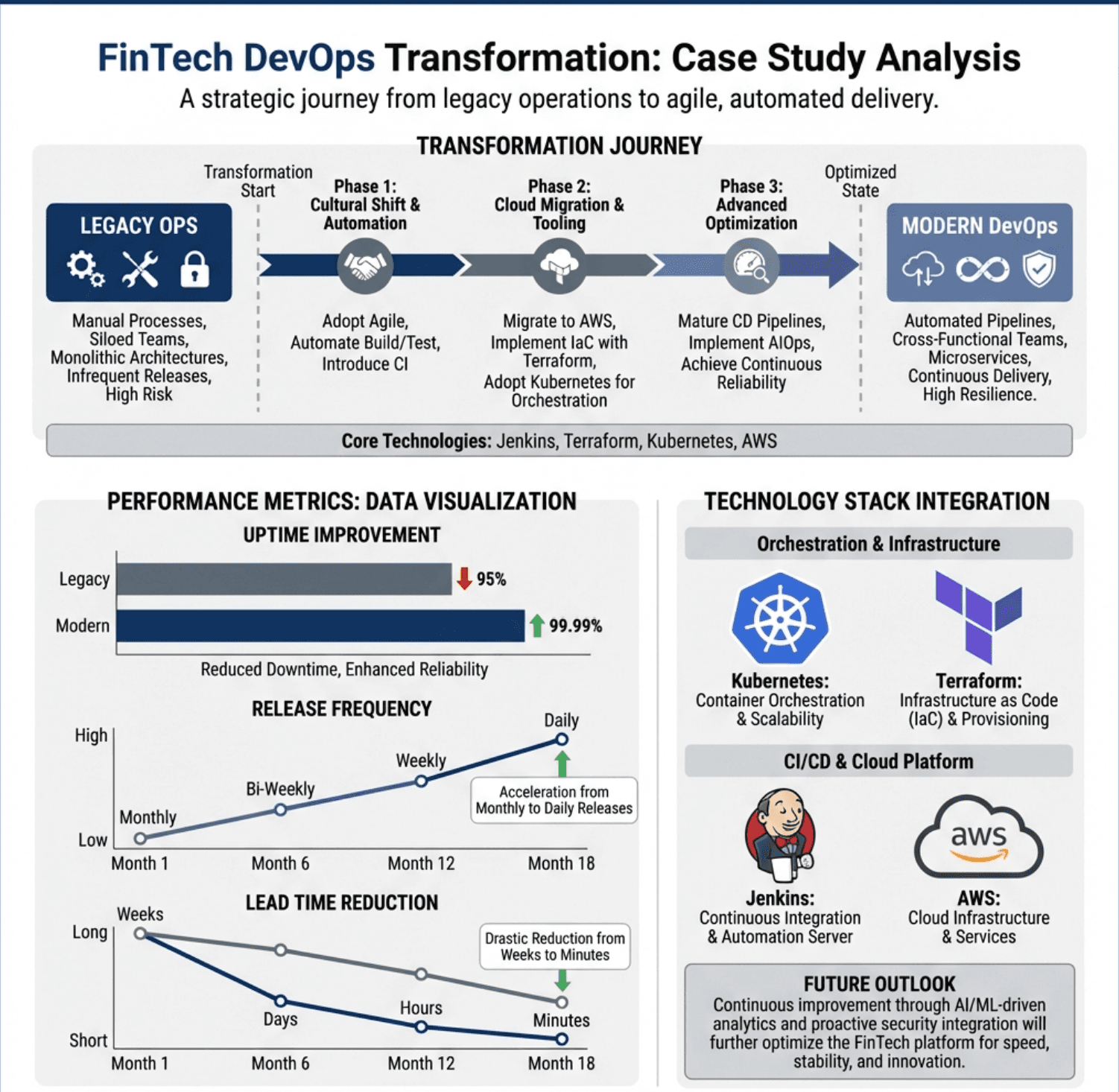
DevOps Transformation for a FinTech Company: Achieving 99.99% Uptime and Faster Release Cycles
Confidential FinTech Company (India)
AWSKubernetes (EKS)

DevOps Transformation for a FinTech Company: Achieving 99.99% Uptime and Faster Release Cycles

The client operated a mission-critical FinTech platform where downtime directly impacted revenue, customer trust, and regulatory compliance. As the business scaled, their existing setup struggled to keep up. Key challenges included: Manual and error-prone deployments causing frequent outages Slow release cycles taking weeks to reach production Single points of failure in infrastructure design Limited monitoring and delayed incident detection No standardized CI/CD pipelines Security checks performed manually and inconsistently The organization needed a reliable, automated, and scalable DevOps framework capable of supporting rapid growth while maintaining near-zero downtime

View Case Study
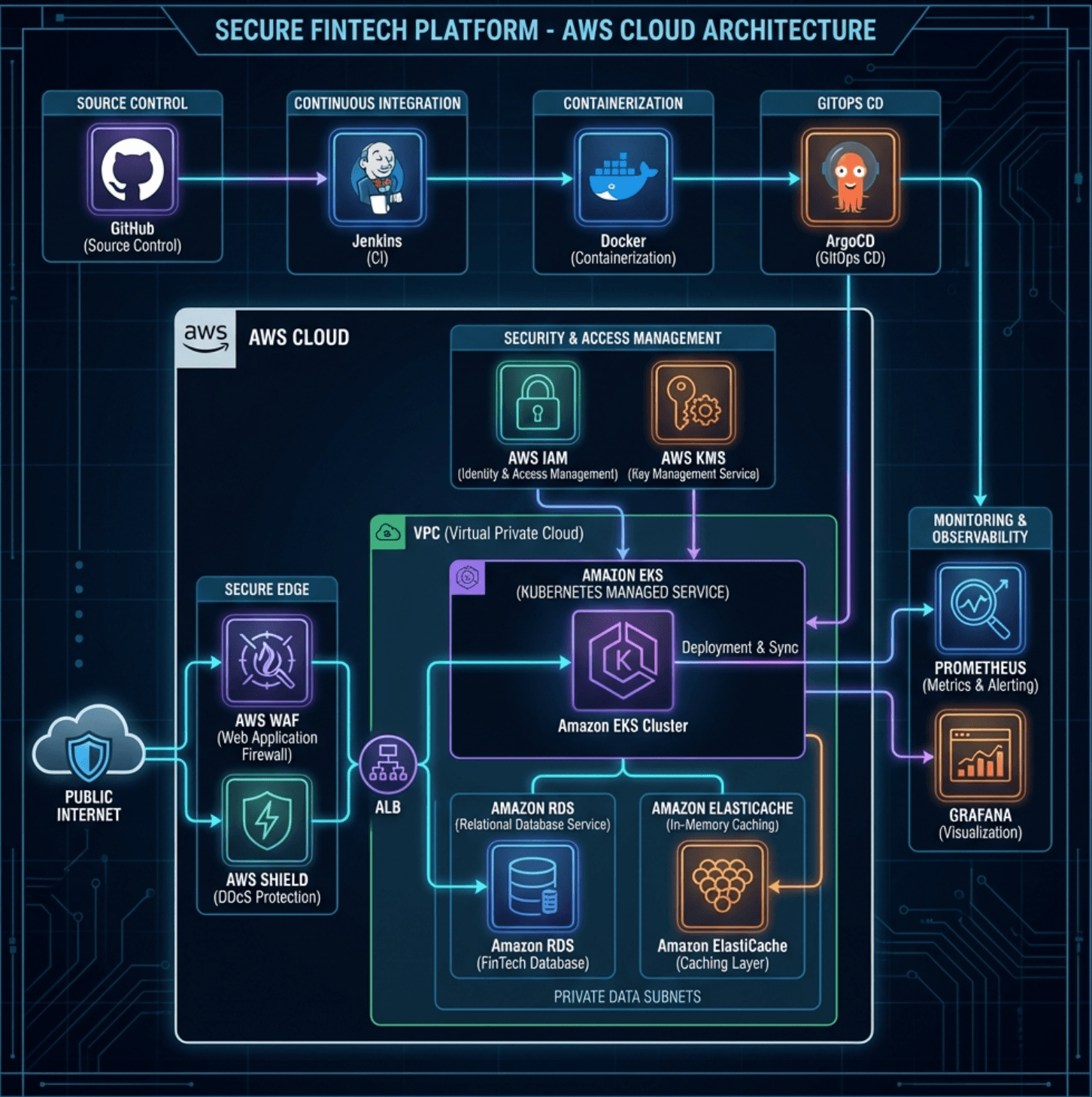
How We Built a Secure & Compliant FinTech Platform on AWS Using DevSecOps
Confidential FinTech Company (India)
AWSAmazon EKS

How We Built a Secure & Compliant FinTech Platform on AWS Using DevSecOps

The client was a rapidly growing FinTech company processing high-volume financial transactions and handling sensitive customer data. As transaction volumes increased, the existing infrastructure began to show critical weaknesses. Key challenges included: Lack of enterprise-grade cloud security No automated compliance enforcement for PCI-DSS and RBI guidelines Manual deployments leading to downtime and operational risk Limited scalability during peak transaction hours No centralized monitoring, logging, or audit readiness Absence of a structured disaster recovery strategy The client needed a secure, scalable, and compliant cloud platform with zero tolerance for outages or data breaches.

View Case Study
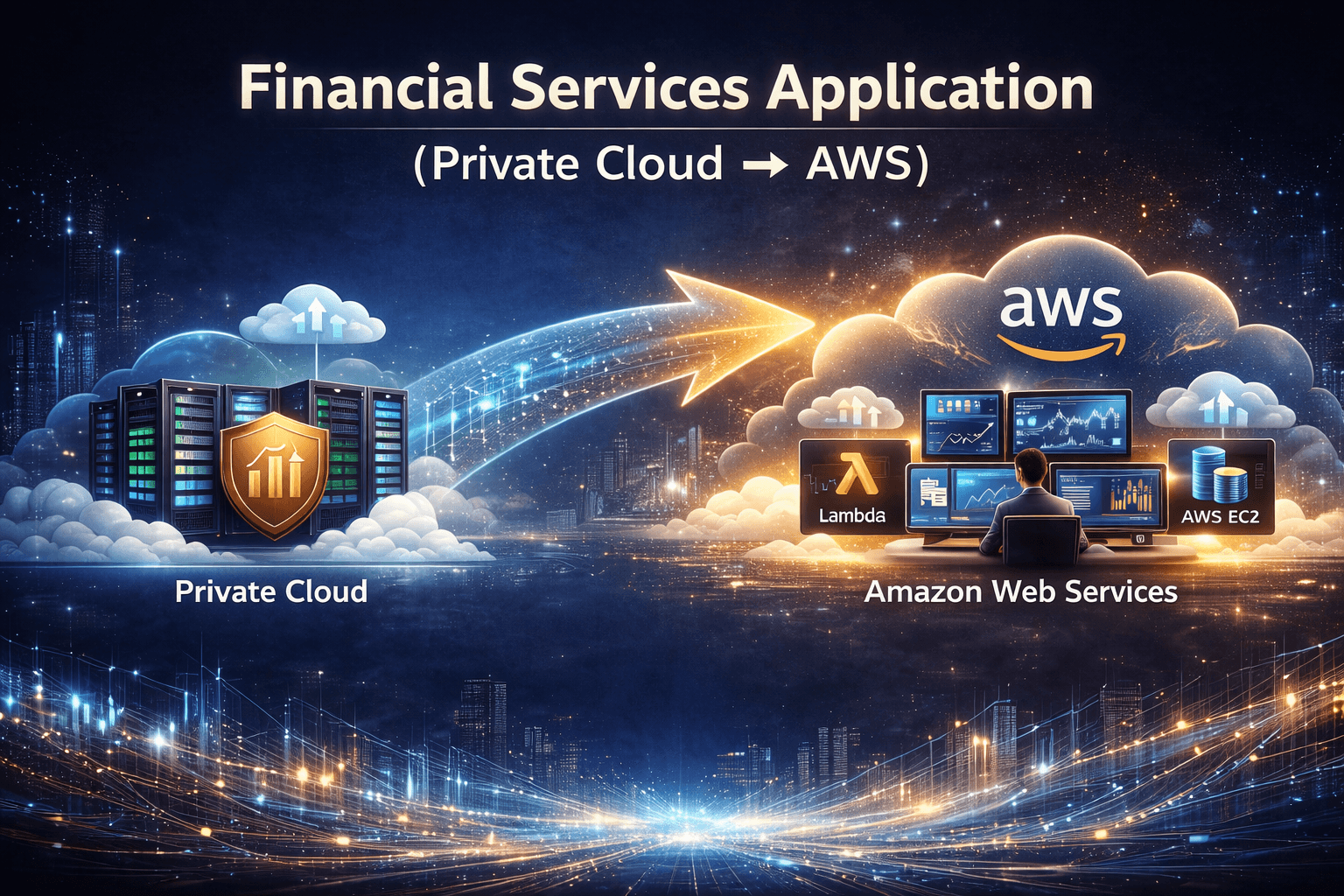
Modernizing Financial Services Applications with AWS for Scalability, Analytics & Cost Efficiency
Fintech
Amazon Web Services (AWS)Application Modernization

Modernizing Financial Services Applications with AWS for Scalability, Analytics & Cost Efficiency

The customer is a regional financial services and investment firm operating in a highly competitive and regulated market. Their core business includes customer-facing CRM platforms and real-time trading applications, which were hosted on a VMware-based private cloud. As customer volumes increased and digital engagement became critical, the firm needed a more agile, scalable, and analytics-driven platform to support business growth while maintaining performance, security, and cost efficiency. The existing private cloud environment had become a bottleneck for both business and technology teams: Limited Scalability: The VMware-based infrastructure struggled to handle peak trading loads and sudden spikes in customer activity, especially during market volatility. Lack of Advanced Analytics & AI Capabilities: The platform lacked native support for AI/ML-driven insights, making it difficult to analyze customer behavior, sentiment, and engagement trends in real time. High Infrastructure & Licensing Costs: Rising VMware licensing fees, database costs, and hardware refresh cycles significantly increased operational expenditure (OPEX). Slow Release Cycles: Application updates followed a weekly release cadence due to rigid infrastructure provisioning and manual deployment processes.

View Case Study
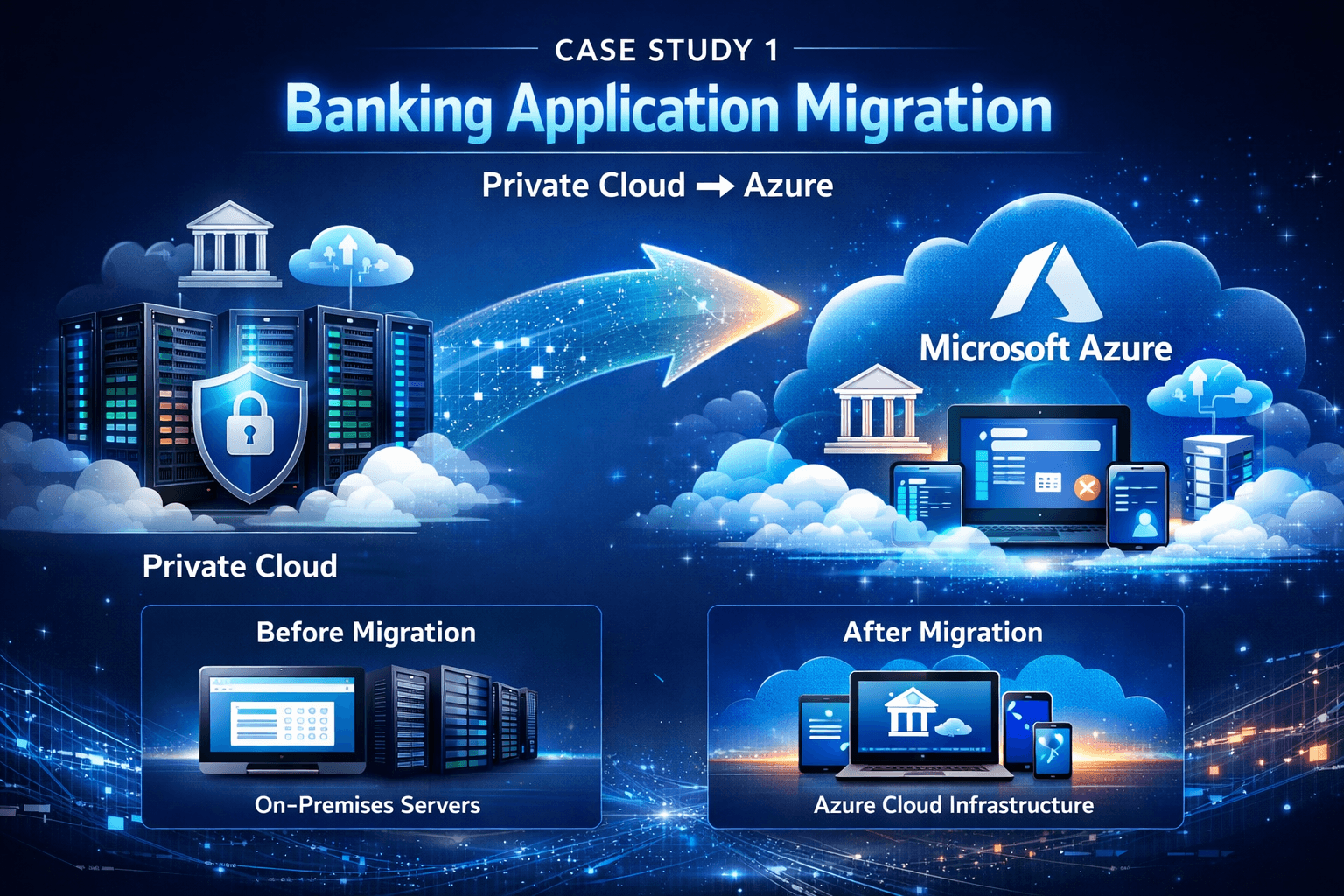
Secure Banking Application Migration from Private Cloud to Microsoft Azure
Private Bank
Microsoft AzureAzure Virtual Machines

Secure Banking Application Migration from Private Cloud to Microsoft Azure

The client was operating a mission-critical banking application on a private cloud environment that had become increasingly expensive and complex to manage. Rising infrastructure maintenance costs, coupled with high proprietary licensing overheads, were impacting overall IT efficiency and scalability. Additionally, the existing environment struggled to consistently meet stringent regulatory requirements, particularly RBI guidelines and PCI-DSS compliance, due to limited native security controls, manual audit processes, and fragmented governance. The disaster recovery (DR) setup was another major concern. Failover processes were largely manual, resulting in recovery times of several hours, which posed significant business risk for a regulated banking workload where high availability and rapid recovery are critical.

View Case Study