
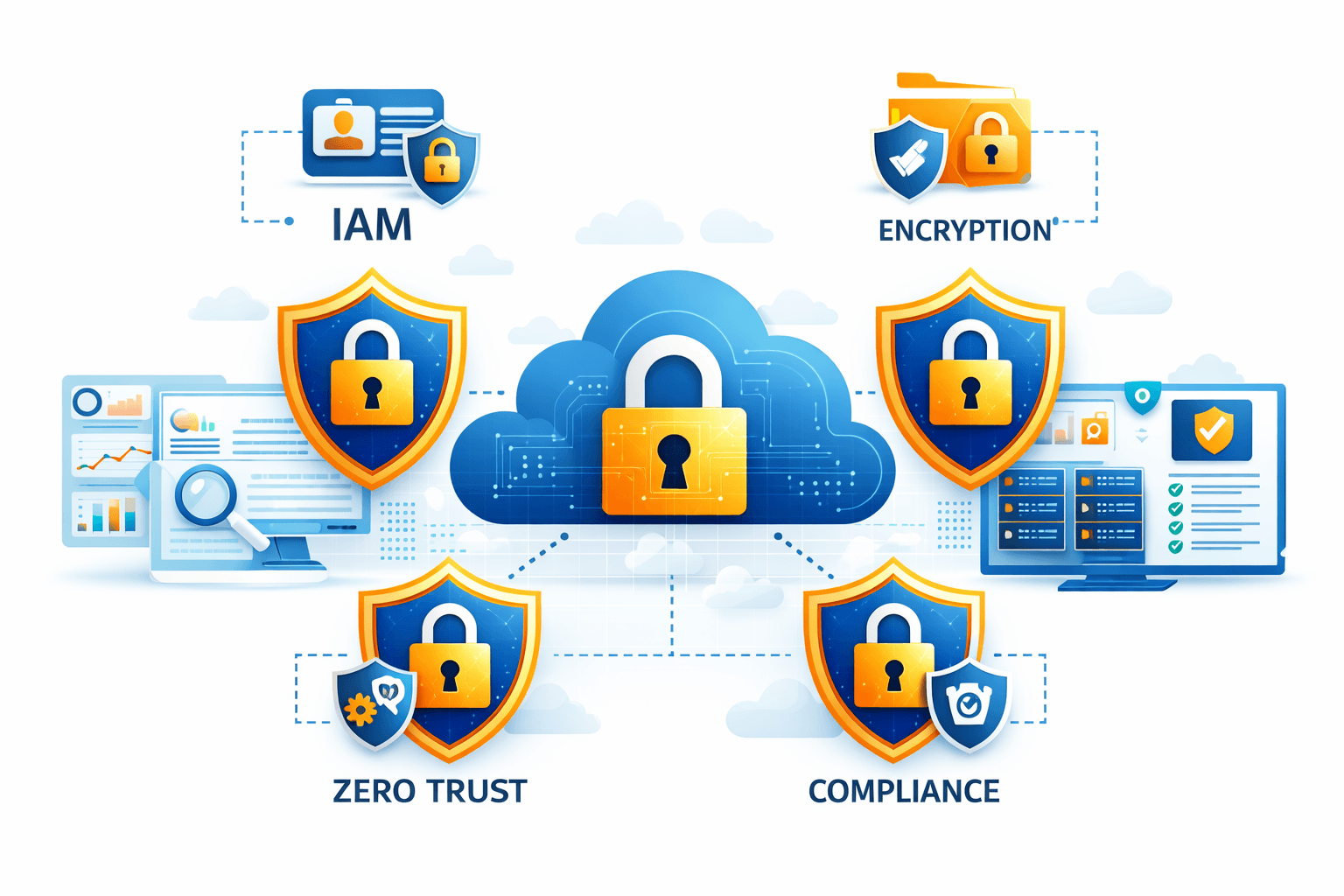
"Learn the top 15 cloud security best practices to prevent data breaches in production environments. Covers IAM, encryption, Zero Trust, monitoring, compliance, DevSecOps, and real-world cloud security strategies. "
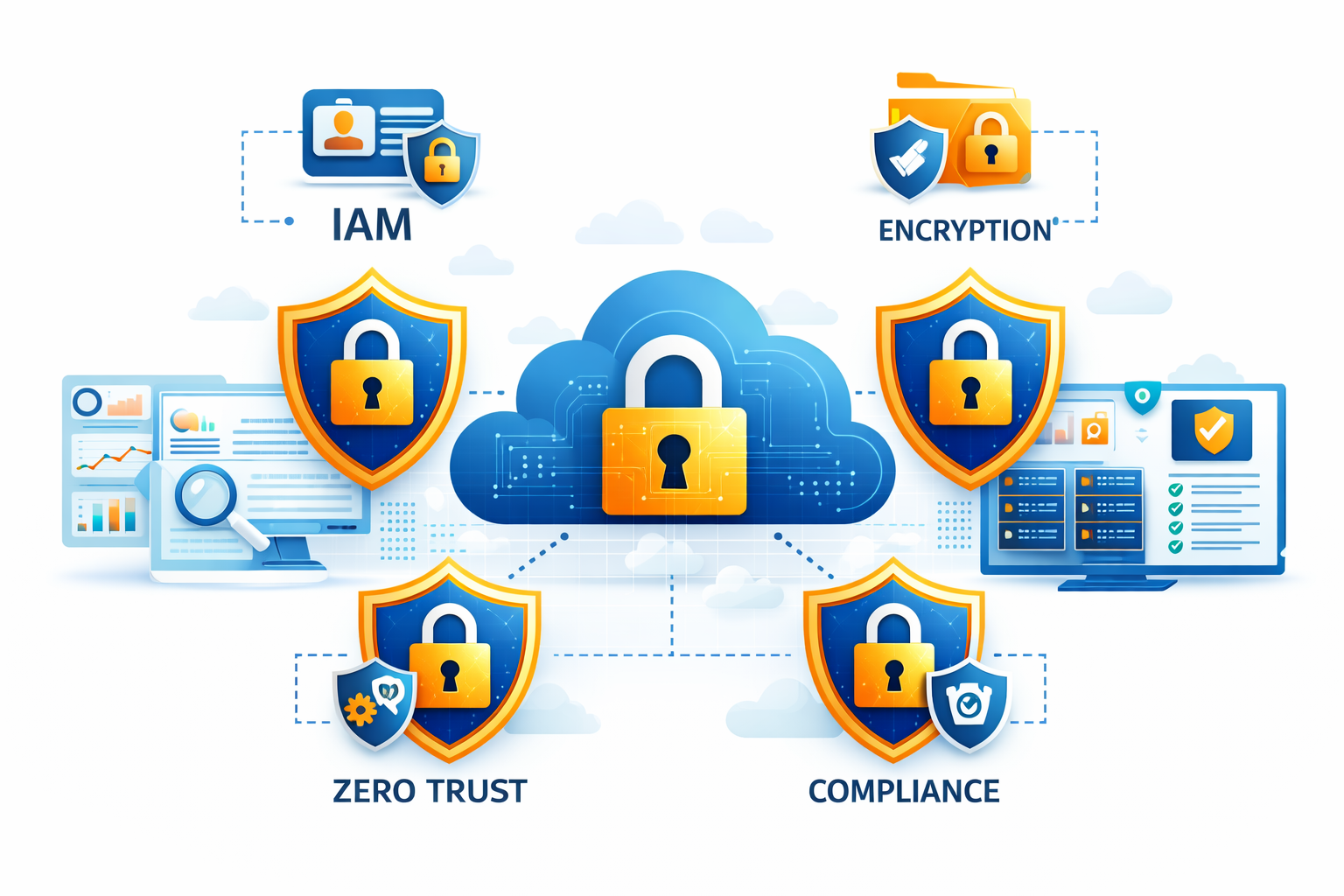
Cloud security is no longer optional—especially in production environments where real customer data, business-critical applications, and compliance obligations exist.
With increasing cyberattacks, misconfigurations, and insider threats, organizations must adopt strong, repeatable, and scalable cloud security best practices to prevent data breaches.
This blog covers the Top 15 Cloud Security Best Practices that every production-grade cloud workload should follow—whether you’re running on Amazon Web Services, Microsoft Azure, Google Cloud Platform, or a hybrid/multi-cloud setup.
1. Enforce the Principle of Least Privilege (PoLP)
Never grant users, applications, or services more permissions than absolutely necessary.
Best Practices:
Use role-based access control (RBAC)
Avoid wildcard permissions (
*)Review permissions quarterly
Use temporary credentials instead of long-lived keys
🔐 Why it matters:
Most cloud breaches happen due to over-privileged IAM roles.
2. Implement Strong Identity & Access Management (IAM)
IAM is the first line of defense in cloud security.
Key Actions:
Enforce Multi-Factor Authentication (MFA) for all users
Separate human users and service accounts
Disable root account usage
Rotate access keys automatically
📌 IAM misconfiguration is one of the top cloud breach causes globally.
3. Adopt a Zero Trust Security Model
Never trust, always verify—even inside your network.
Zero Trust Includes:
Identity-based access
Continuous authentication
Micro-segmentation
Device and context-aware policies
🛡️ This approach significantly limits lateral movement during attacks.
4. Encrypt Data at Rest and In Transit
Encryption ensures stolen data remains unreadable.
Must-Have Encryption:
TLS 1.2+ for data in transit
AES-256 for data at rest
Customer-managed encryption keys
Automatic key rotation
🔑 Treat encryption keys like production secrets—because they are.
5. Secure Secrets and Credentials Properly
Never hardcode secrets in:
Code repositories
CI/CD pipelines
Docker images
Use:
Cloud-native secrets managers
Environment-based secret injection
Secret rotation policies
🚫 Public Git repositories are a goldmine for attackers.
6. Network Segmentation and Isolation
Flat networks increase blast radius.
Best Practices:
Use private subnets for databases
Restrict public IP usage
Apply security groups / firewall rules
Isolate prod, UAT, and dev environments
🌐 Network isolation limits the spread of breaches.
7. Enable Continuous Logging and Monitoring
You cannot secure what you cannot see.
Monitor:
Authentication attempts
API calls
Network traffic
Configuration changes
Integrate With:
SIEM systems
Centralized logging
Real-time alerting
👀 Early detection can save millions in breach costs.
8. Perform Regular Vulnerability Scanning
Cloud workloads change rapidly—so should security scans.
Scan:
Virtual machines
Containers & images
Kubernetes clusters
Open ports & services
🔄 Automate vulnerability scanning as part of CI/CD.
9. Secure Kubernetes and Containers
Containers introduce new attack surfaces.
Kubernetes Security Essentials:
Use RBAC properly
Disable anonymous access
Scan container images
Enforce Pod Security Standards
Restrict privileged containers
📦 A single compromised container can expose an entire cluster.
10. Apply Secure Configuration Baselines
Misconfigurations are the #1 cause of cloud breaches.
Examples:
No public storage buckets
No open databases
No unrestricted SSH (0.0.0.0/0)
Enforced logging everywhere
📋 Use policy-as-code tools to prevent drift.
11. Implement DevSecOps in CI/CD Pipelines
Security should start before production.
Integrate:
Static Application Security Testing (SAST)
Dependency scanning
Infrastructure-as-Code security checks
Container image scanning
🚀 Shift-left security reduces production risk dramatically.
12. Regularly Patch and Update Systems
Outdated systems are easy targets.
Patch:
OS images
Runtime environments
Libraries & dependencies
Kubernetes versions
⏱️ Automate patching wherever possible.
13. Protect Against DDoS and Web Attacks
Production systems must be resilient.
Use:
Web Application Firewalls (WAF)
Rate limiting
Bot protection
DDoS mitigation services
🌊 Downtime can be as damaging as data loss.
14. Maintain Backup, DR & Incident Response Plans
Assume breaches will happen—prepare accordingly.
Ensure:
Encrypted backups
Regular restore testing
Multi-region DR
Incident response playbooks
🧯 Recovery speed defines business survival.
15. Conduct Regular Security Audits & Compliance Reviews
Security is not a one-time task.
Perform:
Internal audits
Penetration testing
Compliance checks (ISO, SOC, PCI, HIPAA)
Third-party risk assessments
📊 Audits reveal gaps before attackers do.
Conclusion
Cloud security in production is about layers, automation, and continuous vigilance.
By implementing these 15 best practices, organizations can drastically reduce the risk of data breaches while maintaining agility and scale.
If you’re running mission-critical workloads in the cloud, security must be engineered—not assumed